Context
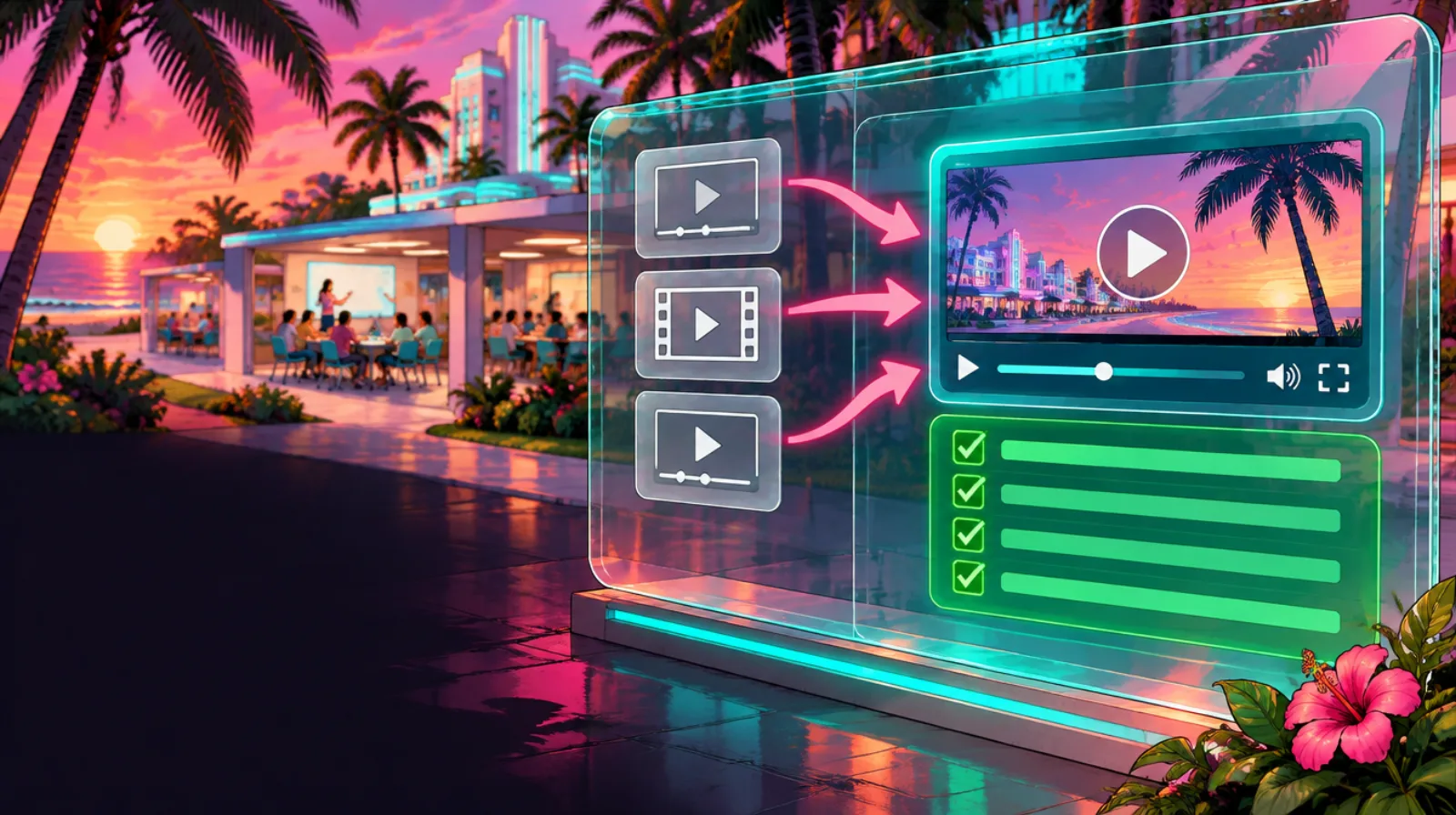
The glass lesson player is the new lesson page on the learner web app, built in 2026. I was the primary engineer. It covers syllabus and lock state, chapters, transcript, notes, discussions, live classes, quizzes and assignments.
The problem
Schools needed a new learner lesson experience. It had to keep parity with the old player's protection and gating rules on every school, while legacy URLs moved to it. A second player could not run alongside the first for long.
What I did
I built the layout, chapters and seek-bar markers, transcript, fullscreen and picture-in-picture, keyboard shortcuts and learning-path locking.
I built the quiz, code and assignment state machines, and the parity gates: enrollment expiry, instalments and e-sign.
I restored the browser and device-support gate byte-identical to the legacy one. Differential tests against legacy grew from 71 to 77.
I wrote a playback and protection spec with 23 requirements and a 93-behaviour parity matrix. It showed that 522 existing tests had never run in CI, and 9 of them could not fail.
After launch I fixed about 25 hotfix PRs, including restoring screen-capture protection and a sign-in reload loop.
Key decision
I re-routed the legacy player URLs to the new player, gated by parity matrices and differential tests, instead of keeping two players for a long time.
The cost was heavy up-front verification work before cutover. It avoided a long period of two codebases to maintain.
Result
Legacy lesson URLs are re-routed to the new player on every school. Quality evidence is the parity matrix and the differential tests. I fixed 18 of 19 defects from a later review, including a query pattern that multiplied database calls about 1,000 times on test series.
I have no engagement numbers, such as completion rate or watch time, from before and after.
What I learned
I would start the parity matrix on day one. The hotfix volume showed gaps that a matrix catches earlier than users do.
Stack
- Next.js App Router
- React
- TypeScript
- Vitest
- Playwright